


Are you confused about healthy eating guidelines? Are you struggling to include the ‘5-a-day’ that the government is recommending? Is ‘5-a-day’ even enough? Are you aware of how much of each macronutrient, i.e. carbohydrates, protein and fat, you should be consuming? Is it even necessary to count these macronutrients?
In this series of three blog posts I will be explaining three different healthy eating guidelines by three different organisations. These three healthy eating guidelines, or plate graphics with advice on what we should put on our healthy plates, are:
1) UK Government Eatwell Guide
3) ANH Food4Health Guidelines
I will introduce each of these in a separate post, as well as give you my opinion of them. This is the last of the three posts, the other articles can be found here and here.
3) ANH Food4Health Guidelines


(click HERE and HERE to enlarge the pictures)
ANH, or Alliance for Natural Health, is an internationally active non-governmental organisation, promoting natural and sustainable approaches to healthcare worldwide. ANH guidelines are based on the following priorities for healthy eating:
- Unprocessed
- Diverse
- Lower carb
- High nutrient-density
There are two ANH plates:
1) Food4Health – for adults and children over 6
2) Food4Kids – for young children aged 1-6
ANH main message is: “Daily consumption of a diverse, varied and balanced range of fresh, largely unprocessed foods between ≥5h periods of fasting by day and ≥12h overnight (i.e. ‘intermittent fasting’), along with regular physical activity, is the foundation for a healthy lifestyle.”
For kids, ANH recommend that “kids eat 4 different food groups each day: starchy foods / fruit and vegetables / meat, fish, eggs, beans and non-dairy sources of protein / milk and dairy foods”
The ANH guidelines are not too dissimilar from the BANT guidelines that I introduced in my second post. The four ANH priorities – unprocessed, diverse, lower carb and high nutrient-density – along with the recommendation to include different colour vegetables and fruits (some of them raw), fermented foods, wild-caught fish and grass-fed meat, gluten-free grains, herbs and spices, as well as the recommendation for longer periods between meals and avoidance of foods that trigger allergy/intolerance (i.e. listening to your own body), are the exact advice I tend to give to my clients regularly. They are great principles to adopt, in order to follow a healthy eating plan.
My 4 Simple Tips
So… my recommendation is to either follow the BANT or the ANH guidelines for best guidance (instead of the government Eatwell Guide).
If you remember these simple tips, you will be doing a lot for your health without complicating healthy eating too much:
1. Stop counting calories that are marked on labels and instead start counting colours and nutrients of foods that don’t have labels:
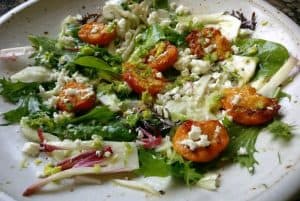
- Make you plates and bowls as colourful as possible with different types of vegetables, berries, fruits and/or spices. Eat colours at every meal, including breakfast and snacks. Remember to eat ‘a rainbow’!
- Ditch packaged foods as much as possible! Whenever you choose to buy packages foods, read the label and avoid buying products that have a long ingredient list and contain ingredients you can’t pronounce or don’t recognise.

2. The more you include real food and vegetables in your diet, the less you have to worry about calories as these kinds of meals are generally lower in calories anyway:
- Cook from scratch with fresh produce and ingredients rather than packaged food products.
- Add herbs and spices to your meals for flavour and health benefits.
- Order a veg box and visit ethnic food stores and start experimenting with new vegetables. Add one new vegetable, berry, fruit, herb or spice to your repertoire every week.
- Keep your freezer stocked up with frozen veg, berries, fruits, fish, seafood and meats that can be defrosted for quick meals with some pre-planning. Freeze leftovers and prepare larger batches of meals for freezing to use on days when you have less time to cook.
3. Include protein and fat with carbohydrate foods to slow down the absorption of sugars from the carbohydrates, e.g.:
- Yogurt (plain and full fat!) and/or nuts/seeds with cereals/porridge for breakfast. Add berries or fruits for colour and extra nutrients.
- Eggs and avocado (and colourful vegetables) with bread/crackers for breakfast or lunch.
- A dollop of nut/seed butter with a piece of fruit for snack.
- Fish, seafood, meat, eggs or pulses with starchy carbohydrates, such as root vegetables, pasta or rice for dinner.

4. Avoid products with added sugar and sweeteners:
- Any more than 5 grams of sugar per 100 grams (or 2.5 grams per 100 ml in drinks) is high-sugar and should be avoided.
- Ingredients have to be listed on the packaging in order of weight, so if you find sugar (or words such as sucrose, glucose, fructose, maltose, fruit juice, molasses, hydrolysed starch, invert sugar, fructose/glucose/corn syrup, honey) at, or near, the top of the list, the product is likely to be high in sugar.
- Avoid fizzy drinks, even sugar-free ‘diet’ drinks, sweetened with artificial sweeteners, which have been shown to be harmful to our gut microbiome, potentially leading to weight gain. And they also keep us hooked on sweet tastes.
- Dilute fruit juices with 3 parts water or avoid completely and instead drink water and herbal teas.
- Make your own healthy treats with a small amount of natural sugars, such as fruits, honey, maple syrup or blackstrap molasses. Have a browse on my blog, join my Facebook Group Healthy New You – For Life and take a look at my Instagram page for simple healthy and delicious meals, snacks and treats.

What you put on your plate is one of the most important things you can do for your health, so take advantage of these tips and start creating colourful healthy plates for your meals. Your body will thank you for it!
******
To get personalised advice and recommendations on how you can support your health with nutrition and lifestyle medicine, please get in touch to book your free 20 minute discovery phone call to learn how nutritional therapy can help you.
Contact Minna on [email protected].
Join my FREE Facebook Group Healthy New You – For Life for health and nutrition tips and advice and delicious healthy recipes.