


The brain is the fattiest organ in the body. The human brain is around 60% fat. The omega-3 fatty acid DHA, docosahexaenoic acid, is the predominant structural fatty acid in the brain, comprising about 30% of all fats, 40% of all polyunsaturated fatty acids (PUFAs) and 97% of all omega-3 fatty acids in the brain. To understand different types of fats, read my blog ‘Facts on Dietary Fats‘.
Protective, Anti-Inflammatory Fat For Neuroplasticity
DHA is not only crucial for brain development and cognitive performance (memory and learning) but it has also been shown to turn on the growth of new nerve cells, protect existing nerve cells and improve signalling between nerve cells. This is called neuroplasticity, which means that our brain and nervous system can renew, reorganise and repair itself when given the right conditions and fuel.
DHA is also anti-inflammatory so it protects the brain from inflammation, which is thought to be at the root of conditions like anxiety, depression, dementia, Alzheimer’s disease, Parkinson’s disease, MS and many other neurodegenerative conditions.
Studies have also shown that patients with Alzheimer’s disease (AD) have low levels of DHA in their brains, particularly in the areas that are crucial for memory formation, as well as in nerve cell membranes in the central nervous system. Lower DHA levels in red blood cells have been associated with smaller brain volumes and signs of cognitive impairment even in those who don’t have a diagnosis of dementia. Diets high in DHA seem to delay neurodegeneration linked to AD and other types of dementia.
 Gluten Free Sardine Pizza
Essential Fatty Acid
DHA is an essential nutrient, which means that our bodies can’t make it and it has to be consumed as part of our diet. The richest dietary sources of DHA are oily fish, such as wild salmon, tuna, sardines, mackerel, herring and anchovies, as well as fish liver and fish roe. We can also get some DHA from white fish, other seafood and sea vegetables, grass-fed meat, dairy and free-range eggs but in less concentrated form.
Nuts and seeds like walnuts and flaxseeds do contain an essential omega-3 fatty acid called alpha-linolenic acid, or ALA, but our bodies are not able to convert this to enough DHA to create the amount we need for brain health.
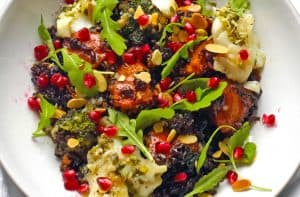 Nerone Black Rice, Quinoa With Roast Vegetables & Gremolata White Fish
What About Supplements?
Both fish-based and vegetarian/vegan supplements are available if you are not eating enough fish or other DHA-containing foods.
However, an interesting paper, called ‘Role of phosphatidylcholine-DHA in preventing APOE4-associated Alzheimer’s disease’, was published last year by Dr Rhonda Patrick from Found My Fitness. In her paper, Dr Patrick proposes that people with Alzheimer’s disease or those who carry the APOE4 gene variant that has been linked to increased risk of Alheimer’s may not benefit from fish oil/DHA supplements. This is due to a potential fault in the transporter proteins at the blood-brain barrier of these people, which may lead to decreased or inefficient transport of DHA to the brain from the forms commonly used in supplements. However, DHA from oily fish, fish liver and roe is likely to get into the brain of these people because DHA from these foods is in a different form from the forms used in supplements, as it’s bound to phosphatidylcholine, the transport of which is not affected by Alzeihemer’s disease or the gene linked to it.
This is an interesting paper and hypothesis, which needs validating in human clinical trials. But in the meantime, for those who have a family history of Alzheimer’s or who suffer from Alzheimer’s disease, it may be beneficial to increase dietary intake of this crucial nutrient, particularly from oily fish, fish liver and fish roe. I myself, as a carrier of APOE4 gene, am eating copious amounts of oily fish, fish liver and roe and other types seafood, in order to protect my brain from any cognitive decline that I seem to have a genetic predisposition to. Are you doing the same?
 Wild Salmon Patties with Zingy and Spicy Thai Flavours
Recipes And Where To Buy
There are some recipes on my blog that use oily or white fish. Click the above pictures to get to the recipes and make some delicious brain-boosting meals for yourself. You can always swap white fish to oily fish to really up your intake of DHA. For more recipes and ideas on how to include more DHA in your diet, join my Facebook group Healthy New You – For Life or check out my Instagram page.
Shop for wild salmon, which has more DHA and generally a better fatty acid profile than farmed salmon, as well as smaller oily fish like mackerel, herring, sardines and anchovies. Tinned versions of these fish are perfectly fine too when it comes to DHA but tinned tuna may not be as good as it’s thought to lose a lot of the omega-3 oils in the tinning process.
Delicious fresh or tinned fish roes and livers can be purchased online. One of my favourite fish suppliers that sells these, along with fish and seafood, is The Fish Society that delivers all fresh seafood frozen in dry ice. Give them a go and see how easily you can add a few more portions of DHA into your weekly diet!
****
To get personalised advice and recommendations on how you can support your health with nutrition and lifestyle medicine, please book your free 20 minute discovery call to learn how nutritional therapy can help you.
You can also contact me via the contact form or [email protected].
Join my FREE Facebook Group Healthy New You – For Life for health and nutrition tips and advice and delicious healthy recipes.