

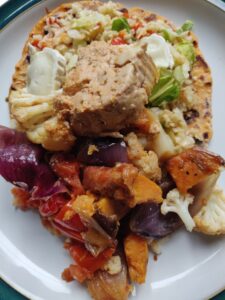
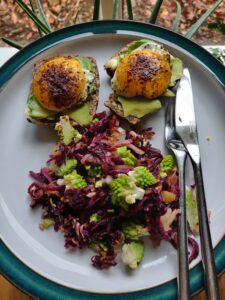
It’s the first month of the year! Many people are under huge (media- and self-inflicted) pressure to change their diet, their health, their weight and practically their lives. There’s New Year’s resolutions to keep, Veganuary to do (or Organuary depending on which camp you belong to), dry January to “suffer through”, there’s weight goals, fitness goals, diet goals, mindset goals…. You name it! One of these ‘goals’, going vegan, is increasingly popular, and for those who are not vegan, trying it out for one month and having a vegan January, or Veganuary, is a booming trend. As you know, I’m all about eating more plants and a wide variety of them – a rainbow – and not just in January but all year round! But… to me, being vegan and being plant-based are two different things. You can be plant-based without being vegan. The research on the health benefits of plants is pretty clear, particularly around the benefits for the gut microbiome, which in turn is vital for our overall health, including immune health and brain health. Eating more veg, fruits, berries, nuts and seeds has been shown to benefit our health in many ways: With my nutritionist hat on, I am not an advocate of any particular dietary dogma, be it veganism, paleo, carnivore or any other. Eliminating a whole food group in my mind is not good for most people in the long-term. Many animal-based foods are also incredibly nutritious and very much essential for our health, providing nutrients that we can’t get from plants. Health is personal to every individual and therefore the food that individual eats must be personalised to them too. What works for one person, doesn’t necessarily work for you. And what worked for you in your 20s, may not work for you in your 40s and beyond. So there is no one perfect diet for all of us, nor is there one perfect diet for one individual throughout their whole lifespan. There is one thing I see in clinic with clients all the time: most people benefit from adding more variety into their diets. This means eating a wider range of plants (read more about dietary diversity HERE), at their most natural unprocessed state, carefully and lovingly prepared from scratch, and exposing our taste buds and the gut microbes to a rainbow of favours, colours and types of food. But it doesn’t need to mean eliminating all animal products. When these colourful plants are enjoyed alongside good quality animal proteins and healthy fats, we have created a balanced meal that makes people feel healthier, happier and more satiated. And it also satisfies most people’s taste buds more than a meal lacking balance and variety so they are more likely to stick to it. The BANT plate guide below and the photos of my meals in this article are good examples of what I call a plant-based diet. Plates of food that are at least half-, preferably three quarters-full of colourful plants – meals that are truly based on plants! In my case, the rest usually includes good-quality, ethically sourced, organically reared or wild-caught animal protein, all cooked or served with healthy fats and varied from day to day and from meal to meal. That to me is true dietary variety! And most of all, such meals taste delicious and keep me fuller for longer so I don’t need to snack between meals! Note of caution… This doesn’t mean that everyone should eat like me. This suits me, but you have to find the best way of eating for you, for your health, health conditions and goals. Just listen to your body and respond to your body’s signals accordingly and eventually you’ll find what works best for you. If you need help with that, please get in touch. If you want to learn how to add more plants to your diet, whether you are vegan, doing veganuary or just want to cook with more plants for their health benefits and yummy taste, check out my upcoming cookalong. It’s fully plant-based/vegan to give you loads of inspiration on how to creatively use plants in your cooking. I’d love it if you can join me. **** To find out how powerful diet, nutrition, lifestyle and mindset can be for our health, please book your free 20 minute no-obligation discovery call with Minna and let’s have a chat. You can also contact me via the contact form or [email protected]. Join my FREE Facebook Group Healthy You – For Life for health and nutrition tips and advice and delicious healthy recipes.(Cover Photo by Photo by Dan Gold on Unsplash)
What Does Being ‘Plant-Based’ Mean to Me?
(To read about learning to be kinder to yourself as an alternative New Year’s goal, check out my recent newsletter HERE if you haven’t seen it yet.)Why Plants?

Health Requires Personalisation
“Nutrition is not a “yes or no” to a food or beverage.
It’s a spectrum of possibilities based on personalisation, quality, accessibility and context.”
Deanna MinichVariety Is The Common Thread
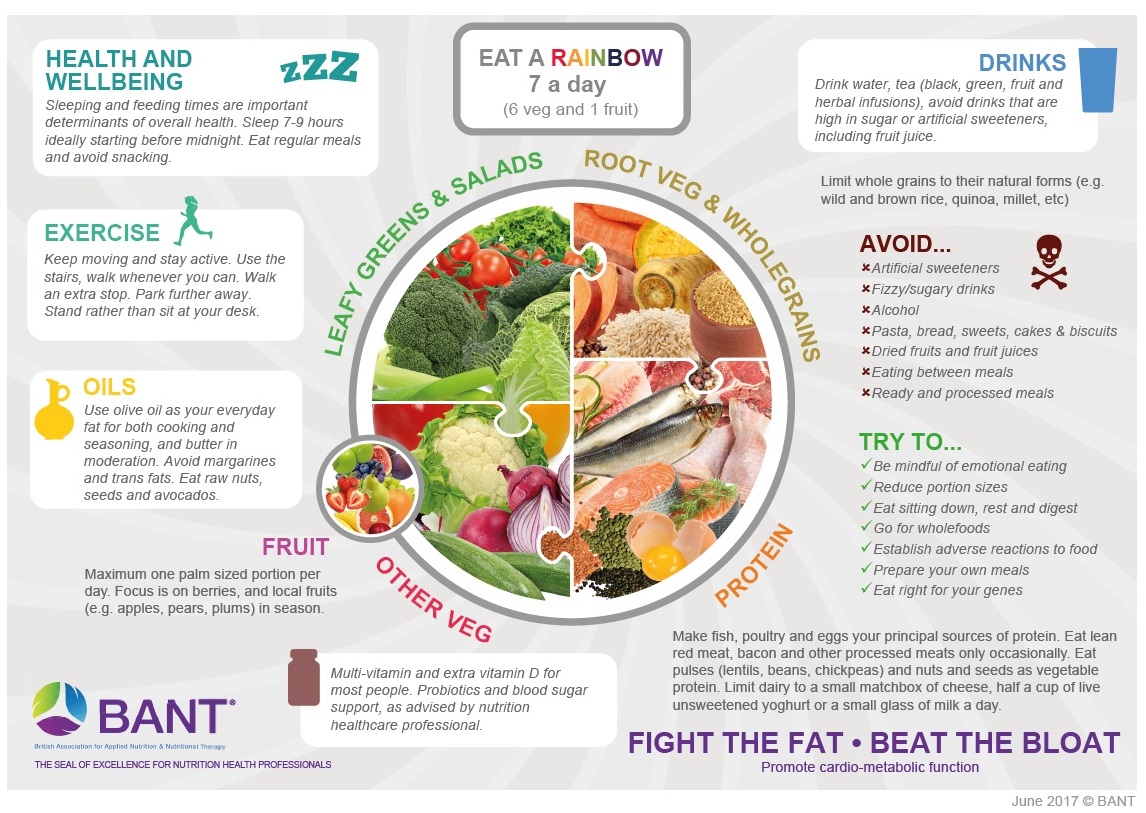 (Click the image above to view the full-sized file)
Don’t Miss My Upcoming Plant-Based Cookalong
Skip to content