

As you might understand, being a nutritional therapist and a lifestyle medicine practitioner, my approach to my own health is proactive and preventative. And that’s what I think we all should aim to do with our own health. And I am convinced if our national healthcare focused more on prevention-led proactive healthcare, rather than reactive disease/symptom-led and medication-based care, we’d have a healthier population.
My bones have been my focus in the past few weeks. What we know when it comes to bone health, is that people with healthy bones have longer lifespans and healthspans. People with healthy bones (and muscles!) live longer and stay mobile for longer, a huge factor for a long healthy and happy life. Falls, fractures and broken bones can lead to long-term disability in older adults and worsening of their quality of life. A hip fracture will heal more slowly in an older adult, prolonging recovery and the return to normal daily activities.
My Family History for Osteoporosis
My 84-year old, physically active mum has been recently diagnosed with osteoporosis and unfortunately had a fall and fractured her arm last year (now fortunately healed well), which limited her physical activity. I’m advising her on how she can still support and improve her bone health even at her age. And knowing my genetic predisposition to osteoporosis, I aim to equip myself with as much information as I can to understand how I can keep my bones strong and healthy into my old age. Hence, I decided to get a bone scan privately so I know where I stand and what I need to do.
REMS Instead of DEXA
Instead of a DEXA scan, the clinical gold standard method used for investigating osteopenia and osteopororis (reduced bone mineral density), I opted for a REMS bone scan (radiofrequency echographic multispectrometry) which is a new alternative to DEXA and done via radiation-free ultrasound scanning. The REMS scans the lumbar vertebrae L1-4 and the femoral neck that joins the hip bone. It gives you the same measurements as the DEXA, a T-score and a Z-score, to indicate your bone mineral density compared to a healthy young adult and to other people of the same age and sex, respectively. Additionally, and this is a bonus compared to DEXA, it gives you a bone fragility score, which is an independent assessment of internal bone structure to evaluate the risk of fracture in 5 years. In effect, this tells you how strong your bones are.
I had my scan done at Profortis clinic in Amersham. I had the most interesting session with Paul who runs the clinic, chatting about diet and exercise for bone health, HRT, and his wife’s journey from an osteoporosis diagnosis back to strong bone health. I can highly recommend Profortis if you want to take a proactive approach to your bone health. If you decide to see Paul, please tell him that I recommended him.
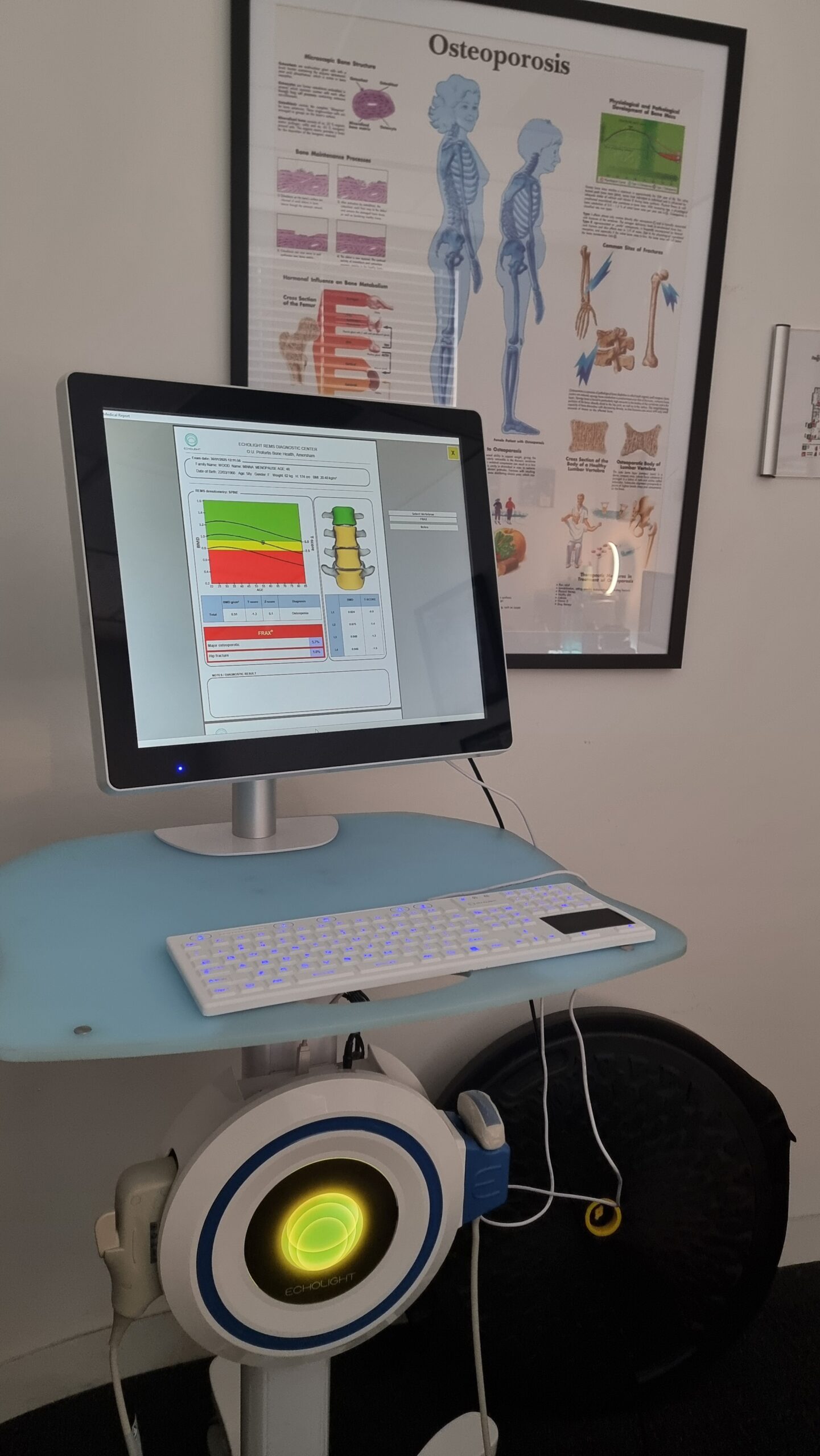
So what did my scan show?
The great news is that my spine bone mineral density (BMD) is normal for my age and both spine and hip fragility scores are great. However, my femoral neck BMD was borderline ostoporotic, with the T-score of -2.5 (left hip, -2.4 for the right hip). With the fragility scores in the green area, though, my risk of having a fracture in the next 5 years is low, around 1-2% for the spine and 1.5-3% for the hip.
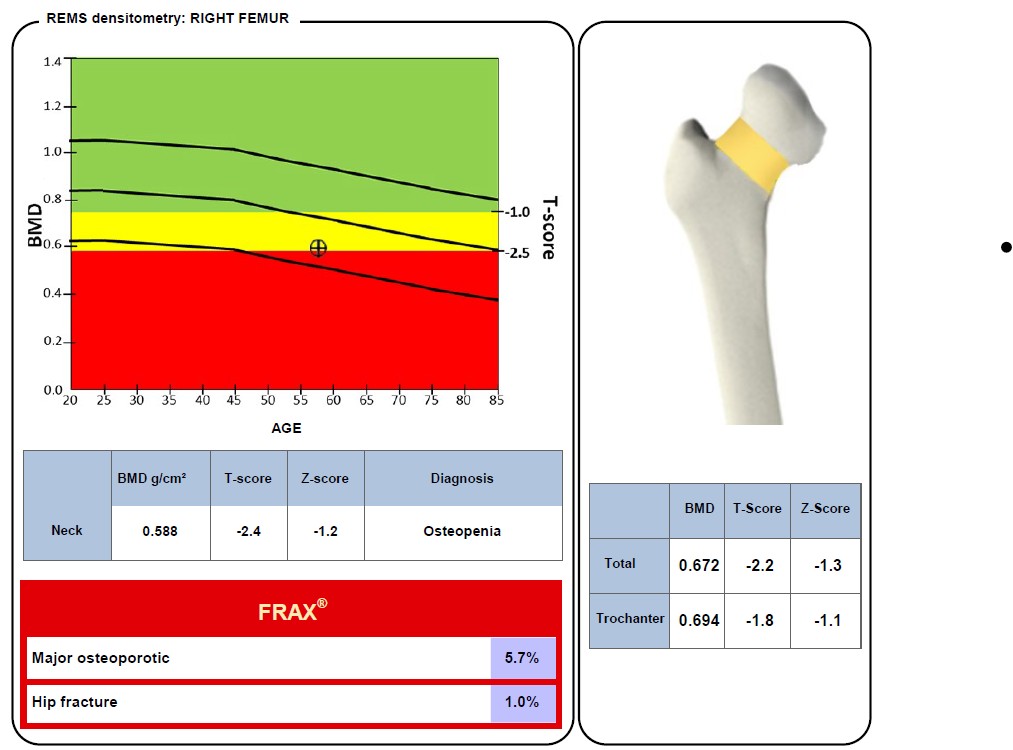
Paul explained to me that HRT usually improves spine BMD more than hip BMD so me being on a low dose HRT could have helped my spine. And he also suspected that having grown up in Finland where vitamin D deficiency is more likely due to long winters, it may have affected my bone health when growing up. However, this doesn’t mean that maintaining an optimal vitamin D level now isn’t helpful. Yes, it will definitely help!
My vitamin D level in a recent test was just adequate but not optimal but I was lucky to be able start optimising my level on a holiday in Barbados (the sun is the best source of vitamin D – diet is not – but during winter months we don’t get it from the sun in the UK) where I made sure to expose my skin to the sun as much as I could tolerate before starting to redden/burn without SPF and before seeking shade. And now I’m waiting for my post-holiday vitamin D test results to come back so I can ascertain how much of an effect the Barbadian sun had and I can calculate my personalised dose for the rest of the winter. And while I wait for the results, I have already started optimising my level with a high-quality supplement.
What am I doing to support my bone health?
- Taking a specially formulated collagen that has been shown to improve bone density.
- Eating my 4-6 prunes a day.
- Making sure I get adequate amount of protein from every meal (aiming for around 100g a day, calculated based on my weight).
- Getting around 1g calcium from my diet.
- Supplementing with a high-quality multivitamin and a separate magnesium.
- Maintaining good gut health by eating plenty of prebiotic and probiotic foods daily.
- Hopping daily on one foot (50 hops per leg) on top of my weight baring strength training 2-3 times a week, yoga once a week, skipping, rebounding and walking a few times a week.
And in 1 year‘s time I will repeat my bone scan and will expect no more than a great improvement in my T-scores to show an improved BMD, particularly in my hip.
“There is always a cause for excessive bone loss and bone fragility. Often, simply by the way we live, our medical treatments, the illnesses we have, and the food we eat (or don’t eat), we unwittingly limit bone health. Most often, the loss of bone mass represents a positive coping mechanism on the part of the body. Bone mass is being sacrificed to maintain many internal biochemical balances essential for the body’s survival.” Profortis Sports Therapy
How are you looking after your bones?
If you need any help with improving your diet to support bone health, let’s have a chat and explore what areas you personally should be focusing on to maintain optimal bone health and reduce your risk of fractures and osteoporosis.
Check out my services here:
- Vitamin D Check – the easiest way to start optimising your vitamin D level for bone health.
- Wellness Check – a comprehensive blood test of almost 60 biomarkers of health with a full consultation.
- Personalised Nutrition Programme – a 1:1 programme with ongoing support for your health concerns and goals (includes a home finger prick test for vitamin D).
Always Better to Test Than Guess!
Don’t just guess, test! Would you like to be the next person I’m running a blood test for so you can stop guessing. And turn the guesswork into informed actions that will make a real difference!
****************
To find out how powerful diet, nutrition, lifestyle and mindset can be for our health, please book your FREE no-obligation discovery call with Minna and let’s have a chat.
For enquiries about working with me on 1:1 basis or about my corporate wellness programmes, please contact me via the contact form or by email: [email protected].
Download your FREE copy of Happy Gut – Happy You for simple everyday hacks to feel happier and healthier.
Join my FREE Facebook Group Healthy You – For Life for health and nutrition tips and advice and delicious healthy recipes.
Main image by dada _design from Pexels via Canva.