


Why Menopause Symptoms Are Just the Tip of the Iceberg
It’s Never Just One Thing
For most health issue at any age, under the surface, there are always multiple underlying factors and root causes, as there are for the symptoms you might experience during the menopause transition and beyond.
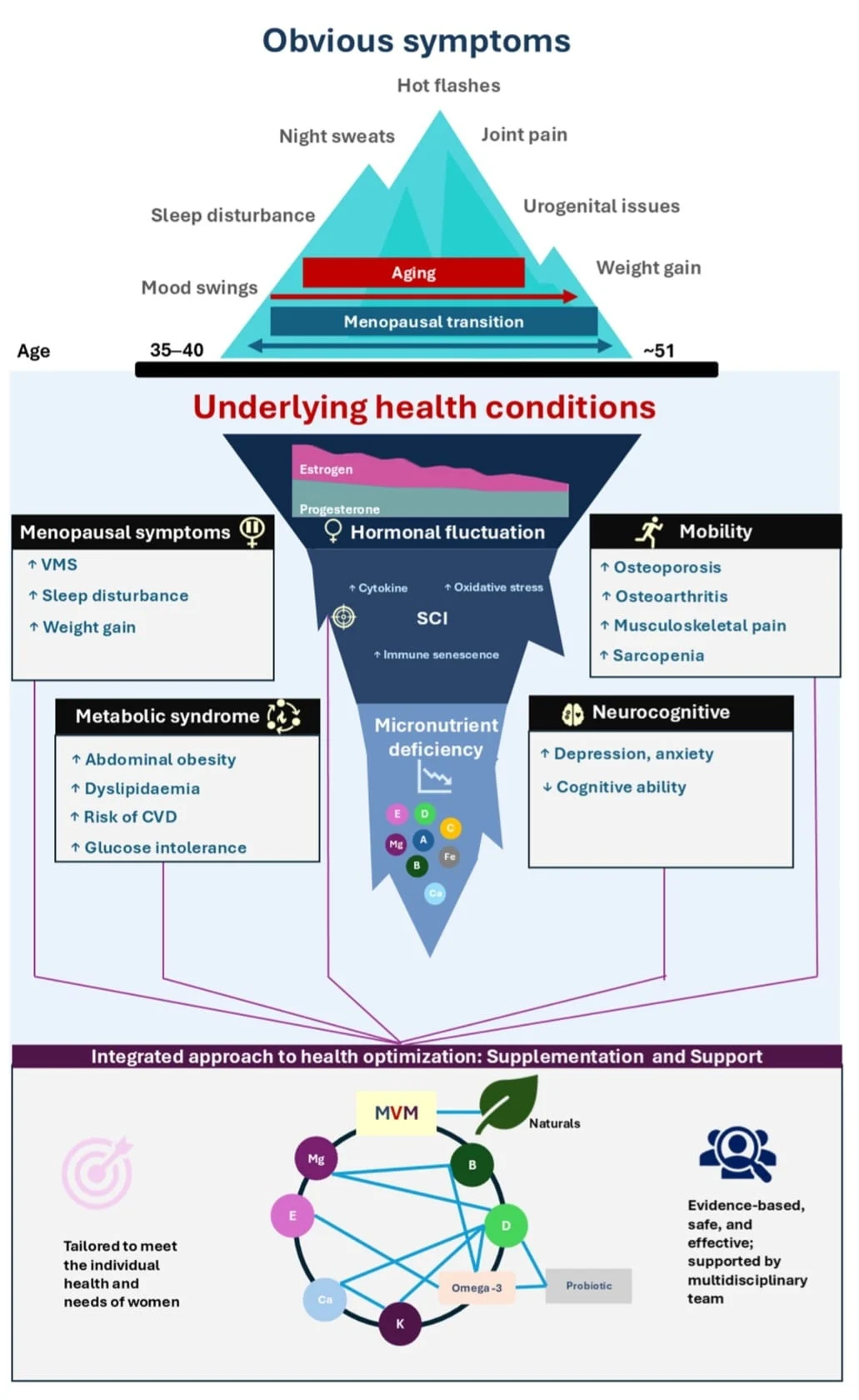
I love this iceberg graph for the menopause, taken from this recent paper ‘Healthy aging in midlife and menopausal transition in Asia: nutrient synergy with dietary supplements’ by Unnop Jaisamrarn et al. and published in journal Climacteric in November 2024. The iceberg model is very much what we do in nutrition and lifestyle medicine.
Getting to the Root Causes
Unlike in conventional medicine, nutrition and lifestyle medicine practitioners are hardly ever focused on just the client’s symptoms. We are always interested in what’s going on under the surface, what’s driving their issues and how they arrived at that point when they started presenting with the symptoms.
I always aim to dig deep when working with my clients to get to the bottom of their symptoms and to help them understand what the “hidden” factors are that they might not have considered. Common menopausal symptoms such as hot flashes, night sweats, low mood, poor sleep, central weight gain, vaginal symptoms, joint pain etc. are the tip of the ice berg, while beneath the surface are broader and often less apparent root causes of these health issues.
To address your presenting symptoms, we need to dig deep to go under the surface and work on the imbalances that are the drivers of your ‘dis-ease’, from diet lacking essential nutrients and lack of physical activity to inflammation, chronic stress and trauma, to name a few.
What’s Really Driving Menopause Symptoms?
Your body is a network of systems and functions that are all connected, and nothing is operating in isolation.
In menopause, the symptoms are not always caused by hormonal imbalances or fluctuations. These often make things worse but you need to think about why your hormones behave like that.
Yes, perimenopause is a driver of these fluctuations but if you never give any attention to the systems that govern hormone synthesis, transport and detoxification, you are really missing a big part of this puzzle. Some of these systems are your metabolism, your gut, your liver and its detoxification capacity.
Recently I attended an all-day liver health and detoxification conference with great speakers and it was really fascinating to brush up on the functions and the interactions of the liver. Your liver really is one of the most crucial players in menopause too.
The Liver’s Crucial Role in Menopause Health
We know that the liver plays a huge part in gut health, hormone health, thyroid health, brain health and menopause health.
Think about all these different interactions:
- The Liver-Gut Axis
- The Liver-Endocrine (hormone) Axis
- The Liver-Brain Axis
- The Liver-Thyroid Axis
- etc.
When the Liver Struggles
If the liver is underperforming, and generally with poor diets and lifestyles that put extra pressure on the liver, it can get inflamed and fat can start accumulating in the liver, leading to elevated cholesterol, digestive issues (such as reflux and sludgy bile), weight gain, constant hunger due to low level of appetite suppressing hormones (such as GLP-1), sex and thyroid hormone imbalances, fatigue, brain fog and more!
Why HRT Alone Isn’t Enough
Adding HRT into the mix when the liver is already burdened from medications, alcohol, poor diet and overall toxin exposure (our world is alarmingly toxic!), can make things worse.
That’s why HRT works best when used alongside diet and lifestyle changes because you are supporting and balancing all the systems that have an impact on your hormone levels and hormone detoxification. This will then give you relief from your symptoms.
Best foods to support the liver and menopause transition are:
- Adequate protein and fibre.
- Whole unprocessed diverse diets (think of the traditional Mediterranean diets).
- Sulphur and choline-rich foods (cruciferous veg, onions and garlic, eggs, organ meats, fish)
- Anti-inflammatory foods such as colourful berries, green tea, spices and herbs.
And don’t forget to reduce added sugars and alcohol, and prioritise your sleep for better circadian alignment, while timing your meals with light exposure (‘circadian nutrition’).
Want to Know What’s Happening Under the Surface?
If you want to know more about how your liver (or any of the underlying factors) affects your menopause symptoms, hormone, gut and brain health, do get in touch and let’s chat about your health.
My Wellness Check includes a very comprehensive blood test that tests almost 60 biomarkers of health (including liver enzymes, cholesterol and sex and thyroid hormones) and is very popular with my midlife female clients, who often say it revealed many things that their GP missed.
My 12-Week Personalised Nutrition Programme includes an easy-to-do NHS home test for vitamin D levels and you get my ongoing support and recommendations to manage and start improving your symptoms. A full comprehensive blood test can be added to this programme.
I can also run a comprehensive stool microbiome test that gives you insights about the gut’s impact on your health. The test looks at your digestive health and function, gut inflammation and infection, systemic inflammation, intestinal permeability and immune markers.
Book a free chat if you want to know more and discuss your health.