


10 Reasons for Waking up at Night and Unable to Fall Asleep
There are a multitude of symptoms women experience when transitioning through the menopause. Poor sleep is one of the most common ones. It affects 40-60% of women during peri-/post-menopause according to the British Menopause Society.
Waking in the night, often several times throughout the night, is one of the most common sleep issues, as is waking in the early hours of the morning and struggling to fall asleep again. For some women, falling asleep at the beginning of the night can also be a problem.
Poor sleep can be very concerning, affecting your energy levels and making your tired the next day, causing a lack of performance and motivation at work as well as cravings throughout the day. It can worsen other health issues and menopausal symptoms, such as brain fog, anxiety and hot flushes, too.
I was one of these women who really struggled with sleep when I went through the menopause so I know how frustrating it can be when you can’t get a good night sleep despite being tired all the time. Just reaching for a generic menopause supplement may help some women but often won’t make much of a difference for the quality of your sleep. This is because, if you haven’t understood the root causes of your sleep issues, you are not actually addressing them in any meaningful way.
And there’s not just one root cause for poor sleep, there can be many, and no two women are the same! In this blog, you’ll find the most common reasons why peri/menopausal women wake up at night and can’t go back to sleep. Read on to understand what might be the cause of your sleep issues.
1. Inappropriate Thermoregulation
Or in plain English: night sweats and hot flushes.
This is one of the most common causes of waking up at night. You wake up drenched and sweaty. You throw off your cover and soon after, you feel cold and get chills. It can even be so bad that your PJs and the whole bed are soaked! Nobody can sleep when soaked wet.
Your body temperature needs to drop sufficiently for you to stay asleep. But your changing and fluctuating hormone levels can lead to inappropriate and exaggerated responses by your thermoregulation centre in the brain, the hypothalamus, triggering it to think your body is too warm and, as a consequence, it starts a chain of events to cool you down. That’s when you start sweating. Your body thermostat has got confused!
Furthermore, your body’s “thermoneutral zone” is narrowed (the neutral temperature zone between the upper, or sweating, and lower, or shivering, thresholds) during the menopause, leading to vasomotor symptoms, i.e. hot flashes and night sweats. Studies have observed increased sympathetic nerve activity in the skin, increased heart rate and decreased blood pressure during a hot flush.
Interestingly however, research also indicates that it’s not always the hot flush that wakes you up but the waking often happens first, followed by the feeling of heat and sweating. Nonetheless, it’s not something you should be struggling with, and there are many things that can support the thermoregulation system and your sleep during the menopause. Stress, inadequate hydration and not enough exercise, as well as poor diet, caffeine and alcohol can all be linked to hot flushes and night sweats as well as making many other menopausal symptoms worse. I work with many ladies with these kinds of symptoms and it’s always a multipronged approach.
This is what one of my menopausal client said after getting her quality sleep back:
“The dietary changes and supplements that Minna recommend have helped me to sleep better, significantly less night sweats and better deeper sleep. I’ve gone from waking up several times in the early hours and staying awake for long periods to waking up once or some nights sleeping right through.”
 Image source: Ronak Pitamber Choudhary-251114364-16380217 via Pexels
2. Decrease in Sex and Sleep Hormone Levels
When thinking of sleep and menopause, we need to consider several hormones, not just oestrogen. But the fluctuations in oestrogen levels during the perimenopause (it can be a real rollercoaster ride!), followed by dropping oestrogen in the later stages of menopause, can indeed trigger hot flushes/night sweats and cause poor sleep.
Another crucial hormone that is involved in sleep is progesterone. Progesterone and oestrogen have a very close relationship with each other, progesterone being the calming friend to the ‘party gal’ oestrogen. While in the menstruating years, women have relatively predictable levels of oestrogen and progesterone, when we hit the perimenopause these hormones start to decline. And this is particularly true for progesterone, the levels of which drop more quickly than oestrogen that can be very erratic for years. So when progesterone declines but oestrogen can still be relatively high we end up with too much oestrogen unopposed by progesterone.
Good quality sleep and progesterone go hand-in-hand. As just mentioned, progesterone is calming. Its metabolite allopregnanolone binds to GABA receptors in the brain. GABA is one of our calming neurotransmitters, helping you feel calm and sleep better. With its sedative and anti-anxiety effects, it’s like an antidote to your stress hormones and anxious thoughts that can keep you up in the night.
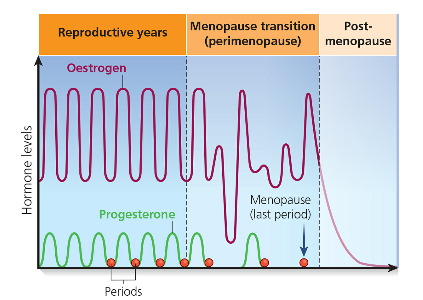
Image source: Fast Facts for Patients: Menopause by Dr. Paula Briggs
Eating a varied and colourful diet rich in protein, complex carbohydrates and fibre will provide a wide range of nutrients to support progesterone levels and general hormone balance. A nutrient I often use with my menopausal clients to improve sleep quality is vitamin C. It has been shown to increase progesterone levels and support better sleep. Other important nutrients are zinc, B6 and magnesium.
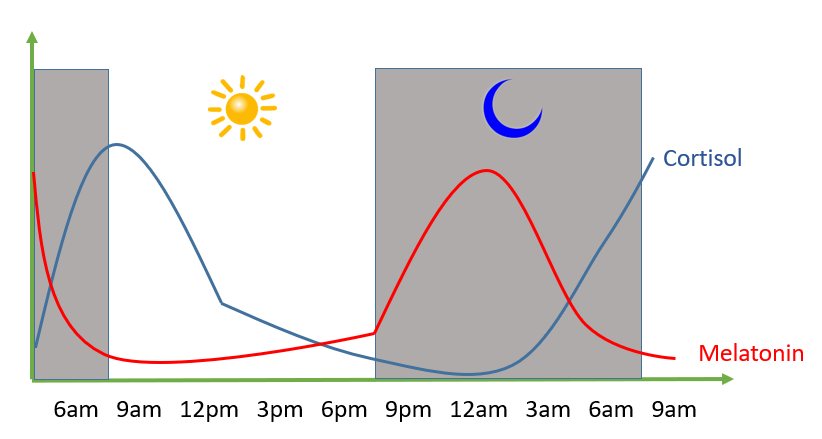
Melatonin is one of your sleep hormones; it makes you sleepy. Melatonin levels usually start increasing as the sun goes down, hence lower light levels and darkness are some of the cues for melatonin secretion. The rise of melatonin triggers a drop in core body temperature, needed for good sleep. When we age, melatonin levels decline, which can lead to higher core body temperature, lighter sleep and more waking at night.
To support your melatonin levels and sleep, getting morning daylight exposure and reducing bright light exposure at night is important. Tryptophan, an amino acid, is a precursor for melatonin, so make sure you get it from your diet; meat, fish and dairy are some of the best sources of tryptophan, and you also get it in nuts, seeds, beans and grains. Magnesium and B6 are needed as cofactors for melatonin synthesis so diets low in these nutrients may affect melatonin levels. Melatonin-rich foods are tart cherries and tart cherry juice, nuts such as walnuts and pistachios, grapes, kiwi and tomatoes, pulses such as lentils, chickpeas and soy, oats and rice.
An important note on melatonin supplements: Even though these are available to buy online, melatonin, as a hormone, can’t be sold as a supplement in the UK as it is a prescription medication and need to be prescribed by your doctor. Nutritional therapists like myself are not allowed to use it with clients but we can help you identify the underlying root causes for potentially low melatonin.
3. Stress Hormones
Is this you? Feeling very tired but can’t sleep. Mind racing, body tense. You are tired but wired. This is your stress hormones at play – cortisol and adrenaline. High cortisol at night is not an uncommon finding when we test salivary cortisol. High night-time cortisol suppresses your melatonin and makes it difficult to fall asleep or stay asleep. You can’t have both high cortisol and high melatonin at the same time. Cortisol is not just a stress hormone but also your awakening hormone, so should be high in the morning but then drop as the day progresses, and when melatonin starts to rise, cortisol should be low and stay low as shown in the figure below.
If you are chronically stressed out, your body is in a fight-or-flight mode and your sympathetic nervous system is constantly switched on, causing high cortisol in the evening. For sleep, you need to switch on the parasympathetic nervous system, or the rest-and-digest mode. When there’s a lot going on in your life, high cortisol, your busy mind, anxiety, worrying about the next day (or your sleep problems) etc., will make a good night sleep difficult. This is when you really need to think about how to manage your stress better. We can’t remove all stressors from our lives but we can very much manage our daily busyness and our mindset better.
Stress can come in many guises, many clients tell me they are not stressed but when quizzed I often can identify several areas in their lives that can cause stress in the body. And menopause itself is a huge stress, read more here.
Consider how you would put a child to bed and do it with yourself; having an hour or so of wind-down before bed, maybe have a bath, read a book (not work-related though!), or do some other calming activity that you enjoy. Leave your devices in another room, avoid strenuous exercise in the evening and avoid or reduce caffeine, alcohol and other stimulants too (see below).
Download my eBook ‘Discover Your Vagus Nerve’ to learn simple strategies to stimulating your vagus nerve and switching on your rest-and-digest mode.
4. Night-Time Blood Sugar Imbalance
Your night-time blood sugar behaviour will reflect your blood sugar during the day. If your blood sugar is on a rollercoaster ride, as shown in the figure below, during the day it’s likely it’s also happening during the night.
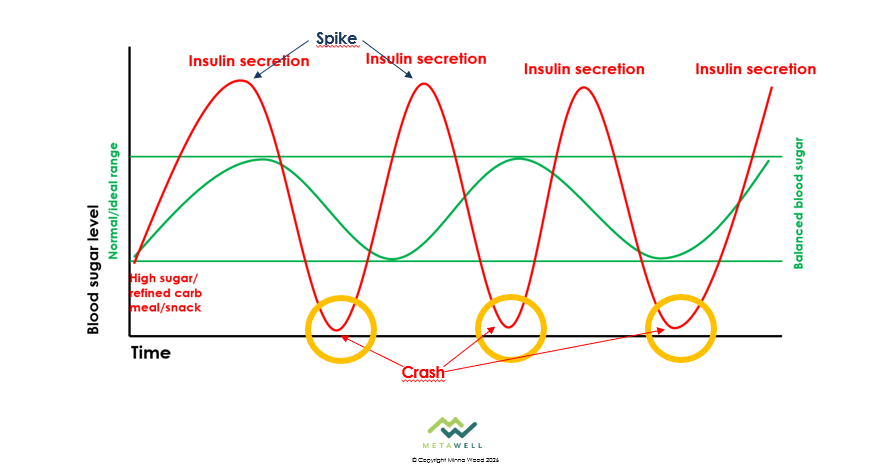
Higher sugar and high refined carbohydrate meals, containing little/no protein, fibre and healthy fats, cause your blood sugar to spike, followed by your pancreas secreting high amount of insulin into the bloodstream. When insulin is high, cells also take up glucose more quickly, which can lead to a sugar crash, or a state of mild hypoglycaemia. Your body sees this as a state of emergency, or a stress state – serious hypoglycaemia can be fatal! – and your body starts secreting stress hormone cortisol. Cortisol’s job is to pull out glucose from storage, in order to deal with the ‘stress’ (from an evolutionary perspective stress would have been a situation of a tiger or other predator chasing you, and in such situation glucose could have saved you!). And, as mentioned above, cortisol is also your awakening hormone, hence that higher cortisol during your sleep will most likely wake you up.
Menopause is not just a hormonal transition, it’s also a whole body metabolic transition. Therefore, supporting your blood sugar balance and metabolic health is crucial for your wellbeing at this stage of your life, for alleviating menopausal symptoms and for better sleep. Managing your blood sugar better during the day will help prevent night-time crashes. Start your day with adequate protein and include it at every meal. Eat plenty of fibre by keeping your meals varied and colourful when it comes to plants. Avoid snacking at night. Read more about blood sugar and insulin here and check out my top tips for how you can lower blood sugar even without changing your diet in the blog below.
My 10 tips for lowering blood sugar without changing your diet
If your are frequently waking up around the same time at night and feeling hungry (not everyone feels hungry when this happens though), you might want a small snack before bed to keep your blood sugar more balanced. Make sure it contains some protein and fats: small amount of plain yogurt with some banana, a hard-boiled egg, nuts and seeds, a slice of cheese or a piece of chicken or turkey are all good options.
A trial with a continuous glucose monitor (CGM) could be useful if you think you have blood sugar imbalance, insulin resistance or type 2 diabetes. I’d be happy to help you with this.
5. Stimulants
Are you drinking caffeinated drinks in the evening or alcohol with your dinner? These can disrupt your sleep. Caffeine has a half-life of around 6-7 hours. So if you drink a cup of coffee say 4pm, and want to be asleep at 10pm, the reason why you may not be able to fall/stay asleep may be because half of the amount of caffeine is still working its way through the system and causing its sleep suppressing and energising effects. And it’s not just coffee, energy drinks and tea that contain caffeine. Also that delicious piece of dark chocolate contains caffeine and may keep you awake if you have too much at night. I’ve written about coffee and caffeine, and their effects on sleep, stress and more here.
Alcohol may relax you and send you to sleep quickly but it also reduces the important REM and deep sleep stages of your sleep, causing more frequent waking and making your sleep less restorative. Deep sleep is crucial for brain health too and we know now that the brain waves generated during deep sleep initiate a waste-clearance system called glymphatic system in the brain that protects it against Alzheimer’s and other neurodegenerative diseases.
This paper from 2017 looking at the effect of alcohol found no protective effect from small amounts of alcohol over abstinence. They concluded that alcohol consumption, even at moderate levels, is associated with adverse brain outcomes including hippocampal atrophy and steeper cognitive decline in lexical fluency. Hippocampal atrophy means that your brain volume is shrinking! Not really what we need as we get older. I myself want my brain in tip top shape so I can do the work I love and enjoy a happy healthy life as long as possible. I’m sure you do too!
Alcohol also contains histamine. Histamine is a neurotransmitter involved in both the nervous and the immune systems, and when histamine levels in your body are high, or your body cannot break it down efficiently, falling and staying asleep can become much harder. If you suspect histamine is an issue for you, it’s worth working with a nutritionist to get it under control. Feel free to book a free chat to discuss more.
Are You Suffering from Seasonal Allergies or Histamine Intolerance
Alcohol puts a lot of pressure on the detoxification function of your liver. When your liver is working hard to detoxify alcohol from the body during your sleep, it can lead to more frequent waking. According to Traditional Chinese Medicine body clock, the liver is at its most active between 1-3am, so if you regularly wake up at this time, it could indicate that your liver may be working extra hard, needing extra support.
Most menopausal women also have reduced tolerance to alcohol, due to many factors, such as the changing hormones, certain enzymes working less effectively, increased liver burden etc. Even small amounts of alcohol can increase menopausal symptoms such as hot flushes, palpitations/racing heart, brain fog, headaches, and of course the 3am waking. This is why I hardly touch alcohol these days.
You can easily test it; give up alcohol for a couple of months and see how your sleep improves.
6. Reflux
If you suffer from heartburn, acid reflux (GORD), or silent or bile reflux, this can be a real killer when it comes to a good night sleep. As soon as you lie down to sleep, your body position makes it easier for the acid to reflux into your oesophagus, which can be very uncomfortable, causing painful heartburn as well as damaging the mucosa of the oesophagus.
You probably are taking a reflux medication if you have reflux and heartburn. Proton pump inhibitor (PPI) medications, such as omeprazole and lansoprazole, are some of the most commonly prescribed and overused medicines in the world. They are not meant to be used for years, but I see clients who have been on them for decades. Apart from making you sleep worse, reflux can also cause other problems particularly if you’ve been on reflux medication for a long time. I’ve written about the problems linked to PPI medications in the article below.
Addressing the root causes of reflux is crucial for supporting your long-term digestive, menopausal and overall health. Stress, poor diet, poor eating habits, late night eating, alcohol, coffee and certain other foods can make reflux symptoms worse. Addressing these lifestyle factors while supporting digestive function and mucosal health are important for reducing and healing from reflux.
If you are planning to come off your medication, using targeted supplements to support optimal digestion, bile flow and nutrient levels can speed up the process of weaning off the medication and healing the digestive tract. I have done extra training in this area and am a qualified accredited reflux practitioner so I have the skills to help you get to the root of your digestive symptoms and help you manage reflux better. I can also help you wean off the medication (when agreed by your doctor), which needs to be done gradually. Never stop your reflux medication suddenly as it is very likely to lead to painful ‘rebound heartburn’.
7. Restless legs
Restless legs is another common symptom that many women experience during the menopause transition. I myself have had the joy of this! Uncomfortable, often crawling sensation in your legs, making you unable to keep your legs still. This feeling unfortunately often comes in the evening or at night when you are wanting to relax and fall asleep, and all of a sudden you get a strong urge to move your legs. It not only feels very uncomfortable but also disrupts your and potentially also your partner’s sleep.
If this is a problem for you, you may have low iron levels. It’s now known that iron dysregulation in the brain can play a fundamental role in the pathophysiology of the disorder. When getting your restless legs investigated, make sure to ask for a full iron panel from your doctor. A full blood count alone won’t show the full picture for your iron status, so you need to ask for ferritin and free iron too (although I often see GPs only testing for the former).
According to the NICE guidelines, a serum ferritin level of less than 30 mcg/L confirms a diagnosis of iron deficiency. But even if yours is not that low it doesn’t necessarily mean all is well. The NHS reference range for ferritin goes all the way up to 310 mcg/L, so the range is huge and this may tell us something about how problematic it is to base a diagnosis on this one number; a result that is within the normal range but may still be very low, e.g. between 30 and 50, might not be high enough for your, particularly if your free iron is low too. That’s why you also want to know your free iron level before making any conclusions and before supplementing. Taking iron supplements when not needed can lead to excess iron levels in the body, that can cause other symptoms and can even damage tissues and organs. Furthermore, the form of iron recommended by the NHS, ferrous sulphate, is not the most bioavailable iron and it’s worth exploring other forms.
If your iron is low, you may have some other symptoms too: hair loss/thinning, shortness of breath, fatigue, anxiety, low mood, cognitive issues, easy bruising, to name but a few.
I can run a comprehensive blood test including a full iron panel when you book a Wellness Check or during a 12-week programme and recommend a more bioavailable form of iron. When taking iron supplements, it’s better to take them every other day. This is because the liver releases the hormone hepcidin after taking a supplement. Hepcidin blocks iron absorption for 24 hours. When taking iron every other day, hepcidin levels will drop back to normal before your next dose.
8. Pain
Body ache/pain was one of my main issues for years during the perimenopause, disturbing my sleep really badly. Over 70% of women at this stage of their lives experience musculoskeletal symptoms and many are disabled by them. A new term, the musculoskeletal syndrome of menopause, was coined by the authors of the paper linked above, to describe the collective musculoskeletal signs and symptoms associated with the loss of oestrogen. The declining estrogen levels can lead to five primary changes that are considered the hallmarks of the musculoskeletal syndrome of menopause:
- Increased inflammation (e.g. joint pain, joint discomfort, frozen shoulder)
- Decreased bone mineral density leading to osteopenia/osteoporosis (loss of height, back pain, stooped posture, low-impact fracture)
- Arthritis (arthralgia, joint pain, joint stiffness)
- Sarcopenia (poor balance, falls, decreased muscle mass, loss of stamina, walking slowly)
- Decrease in the proliferation of satellite cells (muscle stem cells) (decreased muscle mass, inability to gain muscle)
It’s very difficult to get a good night sleep if your body hurts and you feel uncomfortable, so it’s bound to wake you up many times. Many people with body aches also stop exercising, because of the pain or fear of making it worse or just being too tired to do any exercise. This is a mistake!
When you move and exercise, the muscle activation and contraction produce anti-inflammatory chemicals called myokines. These molecules are your friends, they have been shown to modulate inflammation and immune responses, and influence metabolism, neuroendocrine function and cognitive processes. Inflammation causing pain and the neural pathways involved in the signalling of pain can and often are alleviated by these chemicals. I always notice my body aches improving when I do my strength workouts, and the opposite is true if I skip them for a week or two. I regularly thank my body for the aches and pains as they are a message for me go back to my workouts!
There are other benefits from exercise too that can help you sleep better. Engaging in exercise at any age improves brain health and cognition. These muscle-derived signaling molecules, myokines, also activate an anti-inflammatory molecule BDNF, or brain-derived neurotrophic factor. BDNF is often called the brain fertiliser. It plays a role in neuroplasticity, memory and cognition, and its concentrations are critically reduced in the brains of Alzheimer’s patients, but have been shown to drastically increase immediately after an acute bout of exercise.
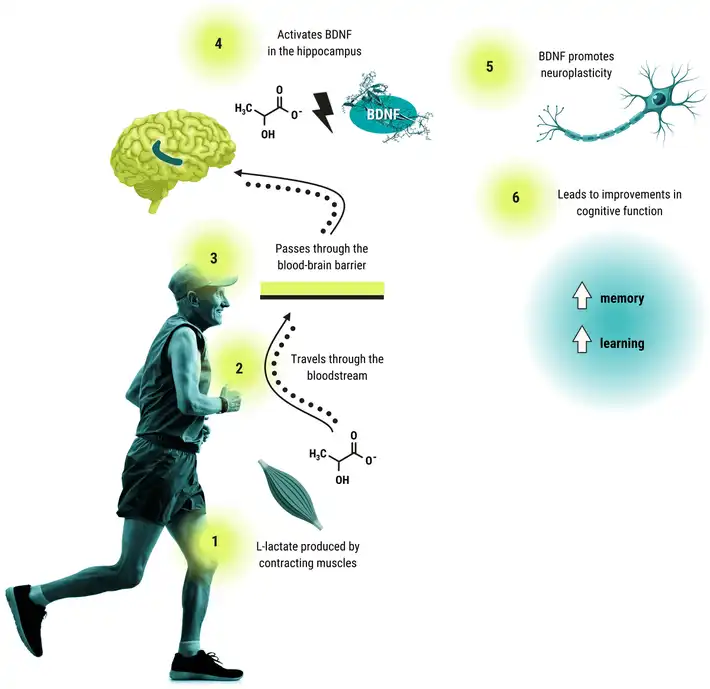
Image source: Heisz et al 2023. Exercise, Sport and Movement, 2(1), 1–5.
Furthermore, working out and building and maintaining muscle mass is something all women should do to support bone health, metabolic health and healthy ageing. Muscles are great glucose sinks, so when you move and activate your muscles, they soak up glucose from the blood stream, supporting optimal metabolic health. Exercise has also been show to give you more energy, by triggering the release of adrenaline and noradrenaline, which enhance both bodily and brain energy levels, brain oxygenation, blood supply, and fuel utilization.
Exercise really is medicine! Physical activity can also increase the levels of feel-good chemicals, such as endorphins, serotonin and dopamine, supporting better moods and motivation and improving resilience to stress, which in turn can help you sleep better.
You don’t have to spend hours in the gym each week, even a 15-20 minute strength training session 2-3 times a week, daily brisk walks and regular yoga/stretching can be very beneficial. It’s the prolonged sitting – so easy to do in our modern lives – that is not supporting our health. It’s worth noting that strenuous exercise can increase your cortisol levels and make sleep worse, so it’s better to time it for the morning or the first half of the day and do calming exercises in the evening to optimise melatonin levels and sleep in the night.
As we age our bodies are more susceptible to inflammation, which can increase pain levels. Inflammaging is a term that describes chronic, low-grade inflammation that we accumulate as we age. This is why it’s really important to eat an anti-inflammatory diet and create other healthy lifestyle habits such a regular movement and exercise to reduce inflammation and those niggling body aches and thus improve sleep.
9. Sleep apnoea
We often assume sleep apnoea only affects overweight men. That’s not true actually. This can be relatively common condition in menopausal ladies too. This is when breathing repeatedly stops and starts throughout the night, due to the brief partial closing off of the upper airways while asleep. According to the British Menopause Society the rate of sleep apnoea doubles in women after the menopause.
Snoring can be one of the symptoms of sleep apnoea but not everyone who has this condition snores. Sleep apnoea can also manifest itself in headaches, insomnia, depression or anxiety and daytime fatigue.
One of the reasons sleep apnoea develops in menopausal women is the decline in female sex hormones, particularly progesterone, which can affect the muscle tone in the throat and neck area. Night sweats and hot flushes could also be linked to increased risk of sleep apnoea. Other contributing factors are excess weight and particularly fat accumulation in the neck area, nasal congestion, smoking and alcohol consumption.
Talk to your doctor about investigating if you might have this condition. A CPAP machine is used to treat it and can make such a huge difference in the quality of life. You can find Epworth Sleepiness Scale questionnaires such as this one online to assess whether you might be affected.
10. Light Exposure
Light plays a crucial role in our sleep-wake cycle. Daylight exposure in the morning/day-time and darkness in the evening/night-time is how humans evolved. These days we live mainly indoors, staring at computers, don’t often step out of the house to see morning daylight but then expose our eyes to bright ceiling and screen lights in the night. This can disrupt our circadian rhythm, suppressing melatonin secretion and messing up with your sleep. Make sure to get morning daylight and use dimmed room lighting and reduce your screen time in the evening/at night.
Most people sleep better in a dark room. When my sleep got worse, I started paying more attention to our sleep environment, particularly the light level during night. We were only using normal curtains in the windows, and the street lamp next to our house was shining through the curtains. I decided to get blackout blinds and also removed any devices that emitted light from the bedroom. And when I travel these days, I always have my sleep mask with me. All this has made a huge difference to my sleep. Most nights I get at least 7 hours, I might wake up once or twice briefly but can fall asleep again without a problem.
So there you have it! 10 reasons why you might struggle with your sleep. I hope this helps you identify what the most likely issue is for you. If you need support with any of this, I would love to help. Book a free no-obligation discovery call here.
Main cover image by Antonio Diaz/Getty Images via Canva
~~~~~~~~~~~~~~~~~~~~~~~~~
Get in touch for a free chat if you’d like to know more about the thyroid testing I offer and learn how to support your menopause transition better.
When you book a 12-Week Personalised Nutrition Programme we dig deep into the root causes of your health issues and you get ongoing support from me, and a vitamin D test. Further testing is optional.
My Wellness Check includes a very comprehensive blood test that tests almost 60 biomarkers of health.
Subscribe to my fortnightly emails here.
Book a free chat if you want to know more and discuss your health.